
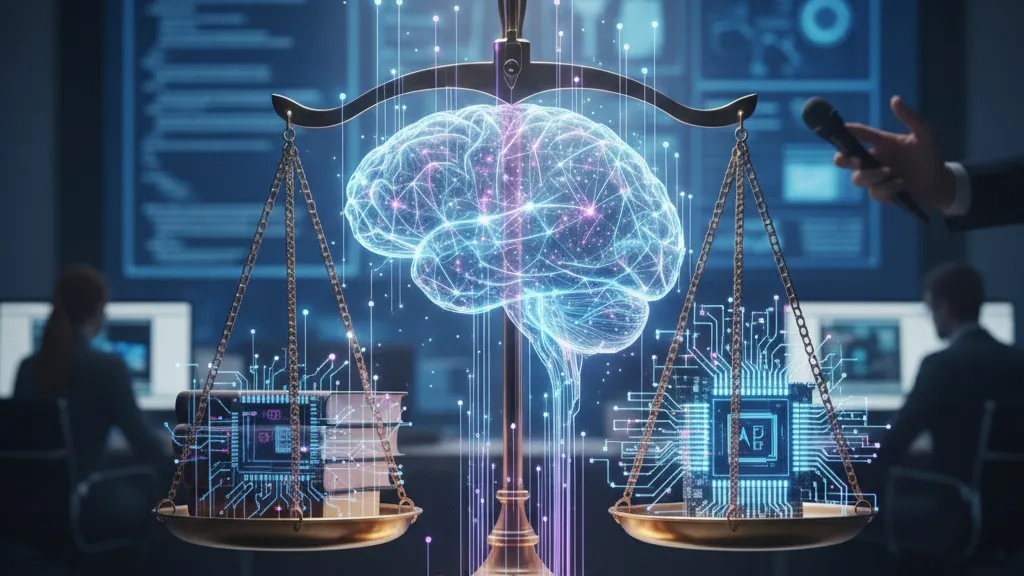
AI law is straining at both ends. Pressure for lighter rules meets firmer enforcement, and institutions are beginning to show how far they will go in shaping the balance. Germany’s Digital Transformation Minister urged the EU to ease AI rules, arguing that strict oversight blocks innovation (Business Insider).
News
Germany’s Digital Transformation Minister urged the EU to ease AI rules, arguing that strict oversight blocks innovation (Business Insider).
Apple pressed the EU to revisit the Digital Markets Act, warning that obligations risk undermining new AI-driven features (Reuters).
A UK tax tribunal judge confirmed using Microsoft Copilot to help draft a ruling, noting the tool supported but did not replace reasoning (Scottish Sun).
The European Commission told MEPs that a general pause on the AI Act is not under consideration, with the focus on coherence across digital laws (Euronews).
Regulation
The Commission reiterated to the LIBE Committee that a moratorium on the AI Act is ‘not on the table’, while promising checks for overlaps with other instruments (IAPP).
The UK finalised the Data, Use and Access Act 2025, amending UK GDPR, the Data Protection Act 2018 and PECR with limited divergence from the EU regime (GOV.UK, Linklaters).
Ireland designated fifteen competent authorities to enforce the AI Act, becoming one of the first EU states to set up a full enforcement structure (Department of Enterprise, Trade and Employment).
Cases
VP Evans v HMRC (First-tier Tribunal, Tax Chamber). The judge partly granted a disclosure application and confirmed limited use of AI during drafting, recording reasons in the decision (Irish Legal News).
Events
The Royal Society hosted “AI and the Law” this week, a cross-disciplinary forum on governance, evaluation and institutional capacity (Royal Society).
Academia
The OECD published guidance on trustworthy public-sector AI, focusing on procurement, accountability and risk management (OECD).
A paper on “law-following AI” warns that agents designed to mimic compliance may still evade duties, creating risks of performative legality (arXiv).
Researchers highlighted challenges in applying the AI Act to deep learning for medical device inspections, raising tensions with EU medical-device rules (arXiv).
Business
The UK design law consultation is asking whether AI-generated designs should qualify for protection, drawing intellectual property law into the AI debate (JDSupra).
Analysts are questioning whether AI systems could be designated as “core platform services” under the DMA, extending obligations to foundation models (TechPolicy).
Competition regulators are intensifying scrutiny of AI-related partnerships and vertical integration in cloud and compute markets, citing risks for access and interoperability (Global Competition Review).
Takeaway
AI law is moving into its testing phase. Political resistance, regulatory resolve, judicial experiments and business manoeuvres are colliding, showing that the real question is not whether rules exist but how they will hold under pressure.
Sources: Business Insider, Reuters, Scottish Sun, Euronews, IAPP, GOV.UK, Linklaters, Department of Enterprise, Trade and Employment, Irish Legal News, Royal Society, OECD, arXiv, JDSupra, TechPolicy, Global Competition Review